


.png)
What You'll Learn
Asking for a deposit is one of the highest-leverage moves a landscaping contractor can make, yet many avoid it because they worry it will cost them the job. This post walks through landscaping contractor deposit collection from start to finish: how to set the right amount, how to ask in a way that feels professional rather than desperate, and how to collect it before your crew shows up. Landscaping projects routinely require contractors to purchase hundreds or thousands of dollars in materials before a single hour of labor is billed. A deposit is the practical tool that protects that outlay. Whether you run a two-person crew or a full-service landscaping operation, a clear deposit process is one of the fastest ways to reduce last-minute cancellations and jobs that go sideways before they start.
Key Takeaways
- A deposit protects your material investment: landscaping jobs often require significant upfront material purchases, and a deposit ensures you are not financing the customer's project out of pocket.
- Set your deposit amount based on the project type: smaller installations and one-time jobs often warrant a higher deposit percentage, while large multi-phase projects may use a milestone payment schedule with a smaller initial deposit.
- The most effective way to ask for a deposit is to present it as policy: "Our standard process is a deposit to hold your spot on the schedule", rather than a personal request that invites negotiation.
- Collecting the deposit remotely is practical and professional. Sending a payment link or Text to Pay request right after the estimate means the customer can pay from their phone before they talk themselves out of it.
- Every deposit should be accompanied by a written agreement that specifies what it covers, what happens if the customer cancels, and whether it is refundable.
- Some states regulate how much a contractor can collect before work begins. Check your state's contractor licensing board rules before setting your deposit policy.
- Customers who pay a deposit are far more committed to the job, a small financial stake turns a verbal agreement into a real commitment on both sides.
SwipeSimple
Stop losing jobs after the estimate.
Send a deposit request before you leave the driveway. SwipeSimple Text to Pay and Payment Links get you paid in minutes — no checks, no follow-up calls.
Get Started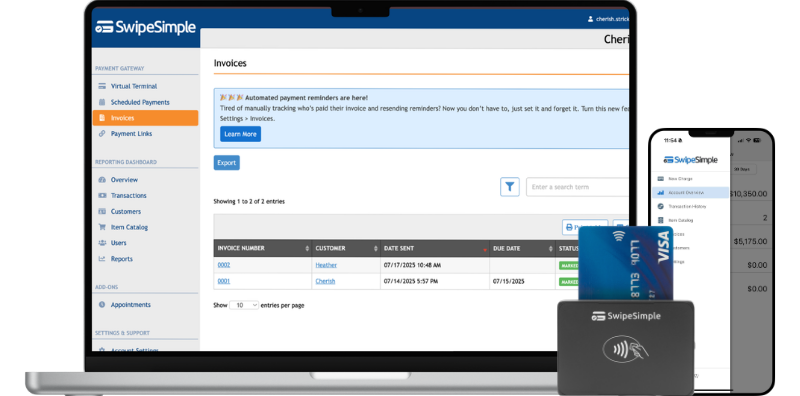
Asking a customer for money before you have done any work is uncomfortable the first few times. Most landscaping contractors have lost at least one quote by naming a deposit too early, handling the conversation wrong, or simply not having a clear policy to point to. The answer is not to stop asking. The answer is to build a deposit process that is professional, clearly communicated, and easy to pay.
Landscaping contractor deposit collection is not about distrust. It is about protecting the materials you purchase on the customer's behalf, holding a spot on your schedule, and establishing that both sides have a real commitment to the job. Done right, it filters out the customers most likely to cancel or dispute. Done poorly, it creates friction at exactly the moment a prospect is deciding whether to hire you.
This post covers the full process: what to charge, how to ask, how to collect, and what to put in writing before any money changes hands.
Why Landscaping Contractor Deposit Collection Protects Your Business
Most service businesses can absorb a last-minute cancellation without a major financial hit. A landscaping contractor often cannot.
By the time a landscaping job is scheduled to start, you may have already ordered pavers, sod, mulch, irrigation components, or plant material specific to that job. Those materials are not returnable, or if they are, you will eat restocking fees and delivery costs. A customer who cancels the day before start, or simply stops responding, leaves you holding inventory you bought for their yard.
A deposit changes that equation. When a customer puts money down, several things happen at once. You recover at least part of your material cost if the job does not proceed. The customer has a financial reason to follow through. And you have a clear signal that the quote turned into a real commitment rather than a "we'll think about it."
Beyond materials protection, deposits solve a scheduling problem. Most landscaping businesses work from a production schedule. Booking a crew for a job that evaporates a week before start means your team either sits idle or you scramble to fill the slot. A deposit, especially when paired with a clear cancellation policy, gives you something to work with when that happens.
According to the National Association of Landscape Professionals, there are more than 692,000 landscaping businesses in the United States. The contractors who run tight, professional operations — including a clear deposit process — are the ones who build steady books of business rather than constantly chasing new leads to replace jobs that fall apart.
How to Set the Right Deposit Amount for Different Landscaping Jobs
There is no single percentage that works for every landscaping job. The right deposit amount depends on the project type, the total cost, and how much of your exposure is front-loaded.
A useful starting point is to cover your material cost. If a patio installation requires $2,400 in pavers, gravel, and edging, a deposit that covers at least that amount protects your actual outlay. On a $6,000 job, that might work out to roughly 40%. On a $20,000 job, the same material cost might be 15-20% of the total.
Common approaches by project type:
One-time installations (patios, planting beds, irrigation systems): These jobs involve significant material purchases and a defined start date. A deposit in the range of 25-50% of the total estimate is common, with the balance due at completion. For very large installations, some contractors break it into three payments: deposit, mid-project, and final.
Seasonal cleanup and maintenance agreements: One-time cleanup jobs often warrant a smaller deposit or none at all, since material costs are minimal. Annual maintenance agreements are different — collecting a deposit or first month upfront establishes the relationship and covers any materials needed in the first service period.
Multi-phase projects (drainage, grading, hardscaping over multiple visits): A milestone structure works better here than a single deposit. Collect an initial deposit to start, then invoice at the completion of each defined phase before the next begins.
One practical floor to apply: your deposit should always cover at least the cost of the materials you will need to purchase to start. If you would not start the job without that material cost in hand, you should not schedule the job without a deposit that covers it.
Note that some states set limits on how much a contractor can collect before work begins. In California, for example, the Contractors State License Board limits the initial deposit to 10% of the total contract price or $1,000, whichever is less, for home improvement contracts. The rules vary significantly by state. Check your state's contractor licensing board before setting your deposit policy.
How to Ask for a Landscaping Deposit Without Losing the Job
The language you use matters more than the percentage. Contractors who lose jobs over deposits usually do not lose them because they asked — they lose them because of how they asked.
The most effective framing is policy. "Our standard process is a deposit to hold your place on the schedule and cover the materials order. The balance is due at completion." That is not a personal request. It is how your business works. Most customers accept policy statements without pushback.
Timing also matters. The deposit conversation belongs at the end of the estimate, when the customer has already heard the full scope and price. Bringing it up as a natural part of "here is how we move forward" makes it part of the close, not a separate hurdle.
Scripts that work in practice:
"To lock in your start date and get your materials ordered, we require a 30% deposit. I can send you a payment link today and have you on the schedule by end of week."
"Our policy is a deposit when we sign the agreement. The rest is due when the job is done and you are happy with everything."
If a customer pushes back and asks why you need a deposit:
"We pre-order materials specific to your job once we have your deposit in, so everything is on-site and ready on day one. It also holds your spot on the schedule so we are not bumping you for another job."
How to Collect Deposits Before the Job Starts
Once the customer agrees to move forward, getting the deposit in hand quickly matters. The longer the gap between verbal agreement and payment, the more time a customer has to reconsider, get competing bids, or simply go quiet.
The most practical collection methods for landscaping contractors:
Text to Pay. After the estimate, send a payment request directly to the customer's phone via text. The customer taps the link, enters their card, and the deposit is done in under two minutes. For customers who agree on the spot, you can send this before you leave the driveway.
Payment Links. A shareable link works well for customers who prefer email or want to pay from a laptop. You send it in a follow-up email with the estimate attached, and they pay when they review everything. No login or download required on their end.
Invoicing. For customers who want a formal paper trail or who pay through a business account, an invoice with the deposit amount and due date is clean and professional. SwipeSimple invoices include automatic payment reminders if the customer has not paid by the due date, which removes the awkward follow-up call.
Tap to Pay on iPhone. If the customer is ready to pay at the estimate, Tap to Pay on iPhone lets you accept contactless payments directly on your iPhone with no separate hardware needed.
Regardless of method, send a receipt and confirm the payment in writing. The confirmation is the start of your paper trail and sets the professional tone for the rest of the job.
What to Put in Writing Before Any Money Changes Hands
A verbal deposit agreement is not an agreement. Before any money changes hands, the customer should sign or acknowledge a written document that covers at minimum:
The deposit amount and what it applies to. Is it applied toward the total balance, or is it a separate booking fee? Make this explicit.
The total contract price. The deposit confirmation should reference the full job estimate so there is no ambiguity about what the remaining balance will be.
The start date and project scope. A brief description of the work included in the estimate, so there is no dispute later about what was agreed to.
The cancellation and refund policy. Specify: Is the deposit refundable if the customer cancels? If so, under what conditions and within what timeframe? Is any portion non-refundable to cover the cost of scheduling or materials already ordered? What notice does the customer need to give?
The payment schedule. When is the balance due? At completion? At each phase? This should be written out clearly so there is no conversation about payment timing after the job is done.
A simple two-page agreement covers all of this. Many landscaping trade associations provide template contracts as member resources. Have any agreement reviewed by an attorney before you use it widely, particularly around the refund and cancellation terms.
Landscaping Contractor Deposit Collection Mistakes to Avoid
No written agreement. Taking a deposit on a handshake leaves you with no documented cancellation policy, no record of what the scope included, and no clear basis for keeping the deposit if the customer backs out. Every deposit should connect to a signed or acknowledged written agreement.
Vague refund policy. "The deposit is non-refundable" is not sufficient on its own. Customers expect clarity on what happens if you cancel, if the job is delayed, or if they cancel with significant notice. A clear, specific policy protects both sides and reduces disputes.
Collecting more than your state allows. Some states cap contractor deposits for residential projects. Collecting above the legal limit can expose you to regulatory complaints and give the customer grounds to dispute the entire agreement. Know your state's rules.
Not sending a receipt. A customer who paid a deposit and received no confirmation may claim they never paid, or may have no record of what they paid for. Always send a receipt immediately after payment.
Waiting too long to ask. If you present the estimate and then follow up a week later to ask for the deposit, you have given the customer seven days to shop around or second-guess. Ask for the deposit as part of closing the estimate, not as a separate subsequent step.
SwipeSimple
Stop losing jobs after the estimate.
Send a deposit request before you leave the driveway. SwipeSimple Text to Pay and Payment Links get you paid in minutes — no checks, no follow-up calls.
Get Started
Frequently Asked Questions
How much deposit should a landscaping contractor charge?
The right amount depends on the project type and your material exposure. A common range for installation jobs is 25-50% of the total estimate, with the balance due at completion. For larger multi-phase projects, a milestone structure with a smaller initial deposit and payments at defined completion points often works better. The practical minimum is covering the cost of materials you need to purchase before work begins. Some states cap the initial deposit for residential projects — check your state's contractor licensing board before setting your policy.
What if a customer refuses to pay a deposit?
Some customers will decline a deposit, and you have to decide whether the job is worth taking without one. For jobs with minimal material cost, the risk may be low enough to proceed. For jobs that require significant material purchases or block out a large crew window, proceeding without a deposit puts you in a financially vulnerable position if the customer cancels. A clear explanation of why the deposit exists resolves most objections. Customers who refuse entirely after a straightforward explanation are often signaling how the payment relationship will go for the rest of the job.
Is a landscaping deposit legally required to be in a contract?
A deposit does not require a formal contract to be legally valid, but you should always pair it with a written agreement. Without written terms covering the scope, total price, and refund policy, a dispute over the deposit is difficult to resolve in your favor. Many states also require written contracts for home improvement work above a certain dollar threshold. Check your state's contractor licensing board for the requirements that apply to your work.
Can I keep a deposit if the customer cancels?
Whether you can keep a deposit depends on your written agreement and your state's consumer protection laws. A deposit clearly designated as non-refundable in a signed agreement, with a reasonable basis such as covering materials already ordered or scheduling costs incurred, is generally defensible. A deposit with no written refund policy is much harder to retain if a dispute arises. Write your cancellation terms specifically before you collect any money.
What is the best way to collect a landscaping deposit remotely?
A Text to Pay request or a payment link sent via email are the most practical options. Both allow the customer to pay immediately from their phone or computer without needing to mail a check or meet in person. Sending the request the same day as the estimate gives you the fastest path from verbal agreement to confirmed deposit.
Are there legal limits on how much a landscaping contractor can charge as a deposit?
Yes, some states set limits on how much a contractor can collect before work begins on residential projects. California limits the initial deposit for home improvement contracts to 10% of the total contract price or $1,000, whichever is less, according to the California Contractors State License Board. The rules vary significantly by state. Check your state's contractor licensing board before setting your deposit policy.
When in the sales conversation should I bring up the deposit?
The deposit conversation belongs at the end of the estimate, when the customer has heard the full scope and price and is deciding whether to move forward. Introducing it as part of the close — "To get you on the schedule and get your materials ordered, our standard process is a deposit" — makes it part of how you move forward, not a separate hurdle.
How do I handle a deposit for a multi-phase landscaping project?
For multi-phase projects, a milestone payment structure often works better than a single large deposit. Collect an initial deposit to start the project and cover the first phase's material costs. Then invoice at the completion of each defined phase before the next phase begins. This structure gives the customer a clear view of what they are paying and when, and reduces your risk by keeping payments tied to completed work.
A deposit policy is one of the few things you can add to your business today that costs nothing to implement and starts paying off on the very next estimate you send. The landscaping contractor deposit collection conversation gets easier every time you have it, especially once you have a clear policy statement, a written agreement, and a simple way to collect payment before the job starts.
SwipeSimple is built for contractors who collect payment in the field and remotely. Invoicing with automatic payment reminders, Text to Pay for instant post-estimate collection, and payment links for customers who want to pay from home all work together to keep your deposit process simple and professional. See how SwipeSimple works for landscaping contractors.
Related posts
.png)
Best Invoicing Software for Small Business in 2026
.png)
Flat Rate Pricing for HVAC Contractors: Is Time and Materials Costing You Money?
.png)




