


.png)
What You'll Learn
When an HVAC customer refuses to pay their invoice, the worst response is silence on your end. This post gives HVAC contractors a practical playbook for responding to non-payment: what to do in the first 48 hours, how to communicate without escalating, what legal tools are available, and how to protect yourself from the next dispute before it starts. An unpaid HVAC invoice costs you the labor, the parts, the scheduling time you committed, and the next job that could have filled that same slot. The steps here apply whether the customer is disputing the work quality, experiencing financial hardship, or simply avoiding your calls.
Key Takeaways
- Start with a written follow-up, not a phone call — a text or email with the invoice attached creates a paper trail and gives the customer a low-friction way to respond without feeling cornered.
- Before escalating, identify which category the dispute falls into: genuine dissatisfaction, scope disagreement, financial hardship, or bad faith. Each calls for a different first response.
- A signed work order, before-and-after photos, and a completion acknowledgment are your strongest protection — build this documentation during the job, not after the dispute starts.
- In most states, HVAC contractors can file a mechanic’s lien on the property for unpaid work. Filing deadlines are short, often 60 to 90 days after job completion, and vary by state. Check your state’s contractor licensing board for the exact rules.
- Sending a formal demand letter via certified mail is often the step that converts a non-paying customer into a paying one, because it signals you are prepared to pursue legal remedies.
- Sending the invoice the moment work is complete closes the window between finished job and payment obligation, and automatic payment reminders handle follow-up without requiring you to make repeated calls.
- Payment plans in writing — with specific amounts and dates — are more enforceable than verbal agreements and recover more over time than forcing a legal dispute.
You finished the job. You replaced the compressor, documented the work, cleaned up the site, and handed the customer a professional invoice. Then silence. A week later you follow up. Then another week passes. Then they tell you they are not paying.
For HVAC contractors, an HVAC customer refuses to pay invoice situation tests more than your cash flow. It tests how well you built the paper trail before and during the job, and what options that paper trail gives you now.
This guide covers the full process: the first response, the documentation you need, the legal tools available, and the prevention measures that make this conversation happen less often.
SwipeSimple
Send invoices by text & email.
Get the tool that let's you send invoices from your computer, tablet, or phone.
Get Started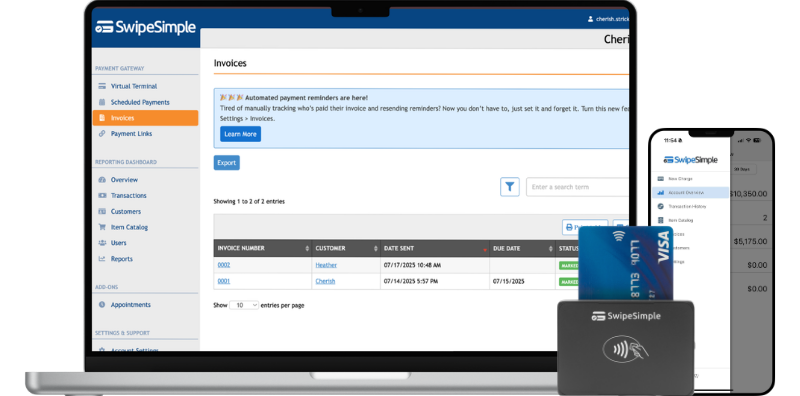
Why HVAC Customers Refuse to Pay — and What It Tells You
Not every refusal means the same thing. Diagnosing why the customer is not paying tells you how to respond.
Genuine dissatisfaction. The customer believes the work was not done correctly, that the problem was not fixed, or that something was damaged during the job. This is the most legitimate dispute and the one requiring the most careful handling. If there is a real quality issue, acknowledging it and offering a resolution is often faster than fighting. If there is not, your documentation is what protects you.
Scope disagreement. The customer expected the job to cost less, or did not authorize a specific repair that appears on the invoice. This usually traces back to a verbal estimate without a signed work order, or a technician who performed additional work without confirming authorization first.
Financial hardship. The customer wants to pay but cannot right now. This calls for a different response than bad faith — a payment plan often recovers the full invoice amount over time rather than forcing a legal dispute that costs both sides more.
Stalling and bad faith. Some customers dispute invoices as a negotiating tactic or with no intention of paying. The pattern here is avoidance rather than engagement — missed calls, no response to messages, or a series of shifting excuses without any resolution attempt.
Identifying which situation you are in shapes everything that follows.
Pro tip: Before any follow-up call, pull your job file. If you do not have a signed work order and a clear record of what was authorized, you may be in a weaker position than you realize. Use that information to decide how firm to be in the conversation.
What to Do First When a Customer Won't Pay Their HVAC Invoice
The first 48 hours matter. How you respond in this window determines whether the situation resolves or escalates.
Send a written follow-up before calling. A text message or email with the invoice attached creates a paper trail from your first contact and gives the customer a clear, low-friction path to respond. Something like: “Hi [Name], I wanted to follow up on invoice [number] for [service] completed on [date]. Total due is $[amount]. Let me know if you have any questions.” That is it. No threats, no accusations. A timestamped written record that you followed up professionally.
Give it 48 to 72 hours, then call. When you do call, listen more than you talk. Ask directly: “Is there something about the invoice you want to go over?” You want to identify which category this dispute falls into before deciding on the next step.
If it is a quality dispute, address it in writing. Ask the customer to describe the specific issue. If there is a legitimate problem, schedule a return visit to make it right and document everything about that visit. If you disagree with their characterization, respond professionally with reference to your documentation: what the work order authorized, what was completed, and photos from the job. Keep the conversation factual.
If it is financial hardship, offer a payment plan in writing. Propose a specific structure: “I can break this into three payments of $X due on [dates]. I can send that in writing today if that works for you.” Get any agreed payment plan confirmed in writing by the customer. A payment plan with clear dates and amounts is more enforceable than a vague verbal agreement.
If calls go unanswered, escalate to a formal demand letter. A demand letter sent by certified mail, return receipt requested, states the amount owed, the work performed, the original due date, and a deadline by which you expect payment before pursuing legal options. This step alone resolves many disputes because it signals you are prepared to act.
How to Document an HVAC Job to Protect Against Disputes
Your documentation is your foundation if a dispute reaches small claims court, a lien filing, or a licensing board complaint. Build it during the job, not after.
Before the job:
- Get a signed work order or service agreement describing the scope, the quoted price, and the payment terms.
- For larger jobs, collect a deposit before ordering parts or scheduling the crew.
- Note pre-existing conditions in writing, particularly for older equipment.
During the job:
- Photograph the existing system condition before you start, including any pre-existing damage or wear.
- Photograph work in progress and at completion.
- Record serial numbers and model numbers for any equipment installed or replaced.
- If additional work is needed beyond the original scope, get customer authorization confirmed in writing before proceeding. A text confirmation from the customer is sufficient and creates a timestamp.
At completion:
- Get the customer’s signature on the completed work order, or a written acknowledgment if they are not on-site.
- Send the invoice immediately at completion. The sooner the invoice is in the customer’s hands in writing, the sooner the payment clock starts and the harder it becomes for the customer to claim they never received it.
Invoicing tools that bill by text or email directly from the job site, like SwipeSimple invoicing, handle this automatically. The customer receives the invoice the moment the job is done, and automatic payment reminders go out at scheduled intervals from that point forward. That reminder history also creates a timestamped record of every contact attempt, which is useful documentation if the dispute reaches a formal stage.
Pro tip: For residential service calls where payment is practical to collect on-site, sending a Text to Pay request from the job site before you leave closes the window between completed work and payment. On-site collection is not always possible — commercial accounts, larger installations, and customers who are not home at completion often require invoicing — but for straightforward residential calls it reduces the follow-up cycle significantly.
Your Legal Options When an HVAC Invoice Goes Unpaid
If direct communication and a demand letter do not produce payment, HVAC contractors have formal legal remedies available in most states. These are not instant solutions, but they give you real options.
Mechanic’s lien. In most states, licensed contractors can record a mechanic’s lien against the property where the work was performed for unpaid amounts. This lien attaches to the title of the property, meaning the homeowner cannot sell or refinance without resolving the debt. For HVAC contractors, this is often the strongest available tool because it creates a direct financial consequence for the property owner.
Filing deadlines are short and strictly enforced. Depending on the state, you typically have 60 to 90 days after completing the work to file, and some states also require you to serve a preliminary notice before or shortly after starting the job. Missing the deadline typically eliminates your right to file. Your state’s contractor licensing board is the right place to find the specific requirements for your jurisdiction. The California Contractors State License Board publishes lien guidance for California contractors, and the Texas Department of Licensing and Regulation covers requirements for Texas HVAC contractors. Most states have equivalent resources.
Small claims court. For amounts below your state’s small claims threshold, which ranges from roughly $2,500 to $25,000 depending on the state, small claims court is accessible and does not require an attorney. You file a claim, present your documentation — signed work order, invoice, communication records, and photos — and the judge rules on the evidence. Winning a judgment does not automatically produce payment, but it gives you additional collection tools.
Collections agency. A collections agency pursues the debt on your behalf in exchange for a percentage of whatever is recovered, often 25 to 50 percent. This is a last resort because it costs you a significant share of the invoice. It is most appropriate for older debts where direct legal action is no longer practical.
Consult a licensed attorney familiar with contractor law in your state before taking any formal legal action. Lien laws, small claims procedures, and collections regulations vary, and an attorney can advise on the right approach for your specific situation.
How to Prevent the Next HVAC Invoice Dispute
The best response to a non-paying customer is building conditions where the dispute is much less likely to happen.
Require a signed work order before starting any job. A signed document describing the scope, the price, and the payment terms is the foundation of any later legal action. It also establishes a professional tone from the first interaction.
Collect deposits on larger jobs. For equipment replacements, system installations, or any job requiring significant parts ordering, a deposit before you order materials establishes commitment and protects your cost exposure if the job does not proceed.
Define completion in writing. Your work order should describe what the completed job looks like: what work will be performed, what outcome is expected, and any conditions required from the customer. Disputes about whether work was “really finished” are much harder to make when the scope was defined clearly upfront.
Send the invoice at job completion, not days later. The longer the gap between finished work and the invoice, the more psychological distance the customer puts between themselves and the obligation. SwipeSimple invoicing sends invoices by text or email directly from the job site and follows up automatically at scheduled intervals, so the payment process starts the moment the work is done.
Store a card on file for repeat customers. For HVAC maintenance accounts or customers with annual service agreements, storing a card securely on file means payment can be processed immediately at job completion. SwipeSimple’s Managing Customers feature stores cards securely and processes repeat payments in seconds, which removes the follow-up cycle entirely for established customers.
SwipeSimple
Send invoices by text & email.
Get the tool that let's you send invoices from your computer, tablet, or phone.
Get Started
Frequently Asked Questions
How long do I have to file a mechanic’s lien for an unpaid HVAC invoice?
Mechanic’s lien deadlines vary by state but typically fall between 60 and 90 days after completion of work. Some states also require you to serve a preliminary notice on the property owner before or shortly after starting work. Missing either deadline may eliminate your right to file. Your state’s contractor licensing board publishes the specific requirements for your jurisdiction. The California Contractors State License Board and the Texas Department of Licensing and Regulation are examples of state agencies that provide this information. Consulting a contractor law attorney before filing is worth the cost.
Should I send a demand letter before taking legal action?
Yes. A demand letter sent by certified mail with return receipt requested gives the customer a final opportunity to pay before you file a lien or take the matter to court. It also documents that you made a good-faith effort to resolve the dispute before escalating. The letter should state the amount owed, describe the work performed, reference the original invoice and due date, and give the customer a specific deadline for payment. Many non-paying customers respond to a demand letter because it makes clear you are prepared to follow through with formal action.
Can I charge a late fee on an unpaid HVAC invoice?
You can charge a late fee if it was disclosed in your original work order or service agreement before the work began. A late fee clause needs to be part of the written agreement the customer signed — you generally cannot add it after the fact. Some states also cap the percentage or dollar amount you can charge. Including a late fee clause in your standard work order, with the rate stated clearly, is a reasonable and common practice that also gives customers an additional reason to pay promptly.
What if the customer claims the work was not done properly to justify not paying?
Ask them to describe the specific issue in writing, and respond in writing. If there is a legitimate problem, address it directly and document the resolution with photos and a written record. If you disagree with their characterization, respond with reference to your documentation: what the work order authorized, what was completed, and photos from the job. A follow-up diagnostic visit with the customer present, documented in writing, often resolves factual disputes. Keep all communication in writing from this point forward.
At what point should I involve a collections agency or attorney?
Consider a collections agency when direct communication, a demand letter, and legal filings have not produced payment and the debt is old enough that filing a lien is no longer practical. Agencies typically take 25 to 50 percent of what they recover. Consult an attorney when the amount is significant, when the dispute involves complex facts, or any time you are preparing to take formal legal action. A contractor law attorney familiar with your state can advise on the approach most likely to produce payment at the least cost.
What documentation do I need if an HVAC invoice dispute goes to small claims court?
Bring the signed work order, the invoice with the amount owed and due date, a record of all communication attempts including text messages and emails, photos from the job, and any written authorization for out-of-scope work. If you sent a demand letter, bring the certified mail receipt as proof of delivery. Small claims procedures vary by state, so check your local court’s self-help resources for the specific filing requirements.
Should I offer a payment plan to a customer who says they cannot afford to pay?
Yes, if the customer is communicating in good faith. A plan with three or four payments over 60 to 90 days recovers more than a prolonged legal dispute. The plan must be in writing, with specific payment amounts and due dates, and confirmed by the customer in writing. A written and agreed payment plan is more enforceable than a verbal commitment. If the customer misses a payment under the agreed schedule, you have clear documentation to support further action.
Can I put a lien on a homeowner’s property for a service call rather than a major installation?
In most states, mechanic’s lien rights apply to labor and materials furnished for improvement of real property, which can include service and repair work in addition to new installations. Whether a specific HVAC service call qualifies depends on your state’s lien statutes. Your state’s contractor licensing board and a contractor law attorney can tell you whether your specific type of work qualifies for a lien in your jurisdiction.
What is the most effective way to prevent HVAC invoice disputes?
The three most effective prevention measures are: a signed work order before every job that specifies scope, price, and payment terms; an invoice sent immediately at job completion; and automatic payment reminders that follow up at scheduled intervals. Requiring a deposit on larger jobs adds a fourth layer. Together these measures resolve most potential disputes before they become active problems.
How do I write a demand letter for an unpaid HVAC invoice?
A demand letter should include: your business name, address, and contact information; the date of the letter; the customer’s name and property address; a description of the work performed and the date it was completed; the invoice number and amount owed; the original due date; a statement that the invoice remains unpaid despite prior follow-up; a specific deadline — typically 10 to 14 days; and a statement that you will pursue legal remedies including a mechanic’s lien or small claims filing if payment is not received. Send by certified mail with return receipt requested and keep a copy.
An HVAC customer who refuses to pay their invoice is a solvable problem when you have the right documentation, a clear escalation process, and the right collection tools in place. Start with written communication. Listen for the reason behind the refusal. Send a formal demand letter if direct outreach produces no response. And review your intake process: a signed work order, a deposit on larger jobs, and an invoice sent the moment work is complete address most disputes before they have a chance to develop.
SwipeSimple’s invoicing lets you bill customers by text or email immediately at job completion, with automatic payment reminders that follow up at scheduled intervals so the process runs without additional calls from you. For residential service calls where on-site collection makes sense, Text to Pay lets your technician send a payment request from the job site before they leave. Visit SwipeSimple to see how it works for HVAC contractors.
Related posts
.png)
Best Invoicing Software for Small Business in 2026
.png)
Flat Rate Pricing for HVAC Contractors: Is Time and Materials Costing You Money?
.png)




